

Southeast Asia emerges as important market for Legrand
Thu, 1st Oct 2026 (Today)
Legrand is expanding its focus on Southeast Asia as data centre development accelerates across Malaysia, Indonesia, Thailand and Vietnam, with the French electrical infrastructure provider positioning energy efficiency and higher-density facilities as increasingly important to the region's growth.
The company has identified Southeast Asia as a strategic market for its data centre business, with Singapore continuing to play an important role, despite some constraints on new data centre construction, and neighbouring countries rapidly adding capacity.
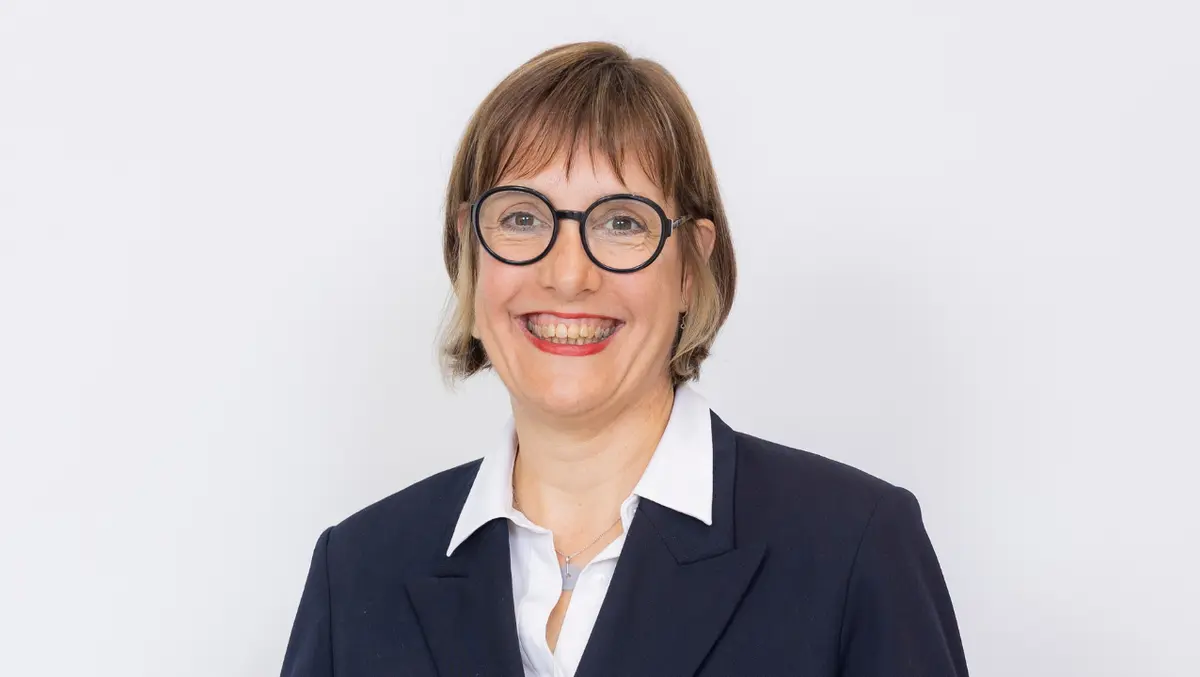
Karine Alquier-Caro, Area VP Southeast Asia at Legrand, said the company's decision to hold its Capital Markets Day (CMD) in Singapore alongside Data Centre World Asia reflected the growing importance of the region to its global strategy.
"Southeast Asia is a core strategic area for Legrand," Alquier-Caro said.
Legrand's data centre business now accounts for around 32 per cent of its global sales, with the company approaching €3 billion in annual data centre revenue.
Alquier-Caro said the company's regional strategy is being supported by both organic growth and acquisitions, particularly in Malaysia, which has emerged as one of the major data centre markets in Southeast Asia.
Over the past two years, Legrand has acquired Malaysian data centre businesses, adding local capabilities as the market has expanded.
The company's Malaysian sales have increased from approximately €20 million in 2023 to around €300 million, supported by both acquisitions and organic growth.
The rapid expansion comes as data centre operators increasingly look beyond Singapore for additional capacity.
While Singapore has historically served as a major data centre hub in Southeast Asia, limits on land, electricity, and other resources have constrained the scale of new development.
Rather than disappearing, however, Alquier-Caro said Singapore's data centre market is increasingly becoming a retrofit opportunity, with operators upgrading existing facilities to support greater computing density and improve energy efficiency.
"When you have a tenant moving, the operators are taking this opportunity to upgrade their facilities," she said.
Malaysia has subsequently emerged as a major destination for new capacity, with development occurring across multiple locations including Johor, Cyberjaya and Kuala Lumpur.
The Malaysian market is now approaching Singapore in terms of data centre capacity, and is continuing to expand.
The shift is also extending beyond Malaysia.
Legrand has seen an acceleration in data centre projects in Indonesia, including projects involving international hyperscalers and local operators, with Thailand experiencing increased activity, too.
Thailand, however, is reviewing some proposed projects in response to concerns around electricity capacity and water consumption.
Around 50 projects in the country are currently on hold while the government reviews the requirements, with new rules expected to determine how those projects can proceed.
Vietnam is also developing additional data centre capacity, with data sovereignty and data localisation requirements contributing to demand for domestic infrastructure.
Expansion across SEA reflects what Legrand sees as a long-term increase in demand for computing and storage that extends beyond the rapid growth of artificial intelligence.
AI training and inference are creating additional requirements for data centre capacity, but data sovereignty, cloud computing, SaaS, and the continued proliferation of connected devices are also contributing to demand, according to Alquier-Caro.
"There is more data to process, more data to store for sovereignty reasons," she said.
Some SEA countries have introduced requirements around where certain data must be stored, creating an additional incentive for operators to build infrastructure within national borders.
That growth, however, is placing greater pressure on the region's electricity and water resources.
For Legrand, this is creating demand for infrastructure capable of supporting greater computing capacity without requiring a proportional increase in resource consumption.
Alquier-Caro said around 40 per cent of Legrand's data centre sales are now associated with solutions designed to help operators reduce energy and water consumption.
She cited PUE as one example, saying Legrand's solutions can help operators reduce PUE from levels of around 1.6 or 1.4 towards 1.
The issue is becoming increasingly important as AI workloads require greater power density, potentially placing further pressure on already constrained electricity networks.
This is also driving interest in technologies such as liquid cooling, heat exchange and other infrastructure designed to manage the additional heat generated by high-density computing.
It is part of a broader convergence between electrification, connected buildings and energy management that Legrand is targeting beyond the data centre sector.
Electrification is also becoming increasingly important across transport, manufacturing and buildings as businesses and governments seek to reduce carbon emissions.
Buildings account for around 40 per cent of global energy consumption, Alquier-Caro said, creating a significant opportunity for technologies that can monitor and reduce electricity use.
Legrand estimates that products and solutions designed to help customers reduce energy consumption account for around 20 per cent of its global portfolio.
These include occupancy sensors, lighting management systems, smart thermostats and climate controls, as well as infrastructure specifically designed for data centres.
The company is also emphasising the importance of measuring energy consumption as a first step towards reducing it.
"What's very important is to measure and collect data, in order to be able to monitor and reduce a company's electricity footprint," Alquier-Caro said.
Connected devices can provide businesses with visibility into how energy is being consumed across offices, residential buildings, infrastructure and data centres, allowing operators to identify areas where consumption can be reduced.
For Legrand, the Southeast Asian data centre expansion therefore represents both a growth opportunity and a technology challenge.
It has made 32 acquisitions in the global data centre market since 2010 as it broadened its portfolio of infrastructure technologies.
Despite the growing contribution from data centres, Alquier-Caro said Legrand does not intend to become solely a data centre company.
Around 22 per cent of the group's global sales are associated with electrification and energy-transition products, while roughly half of its business remains outside the data centre and energy-transition segments.
That diversification remains important as urbanisation and digitalisation continue across the SEA market.
Legrand is also continuing to invest in the region directly, with its new Singapore headquarters being inaugurated as part of its presence at the CMD and Data Centre World Asia events.
For Alquier-Caro, the investment reflects the company's view that this region will remain an important market as data centre capacity expands beyond just Singapore.
The regional shift could also change the requirements placed on data centre infrastructure providers.
As operators move into markets with different levels of electricity availability, water constraints, regulatory requirements and renewable energy access, efficiency is likely to become increasingly central to new projects.
Alquier-Caro expects data centre demand to remain a long-term growth driver, but the company is also positioning its wider portfolio around the infrastructure required to manage rising electricity consumption.
"The need for more data storage and data processing is going to be unavoidable," she said.