

Yokogawa wins S$4.2 million grant for Singapore grid pilot
Wed, 4th Nov 2026 (Today)
Yokogawa Engineering Asia has received a S$4.2 million Energy Grid 3.0 grant for a Singapore electricity grid project. The award will fund a pilot focused on industrial participation in grid stability services.
The grant falls under the Energy Market Authority's Future Grid Capabilities Roadmap and is administered by the Advanced Energy and Decarbonisation Office, a national platform hosted by A*STAR. The project is titled Distributed Inertia Provision from Conventional and Inverter Interfaced Assets.
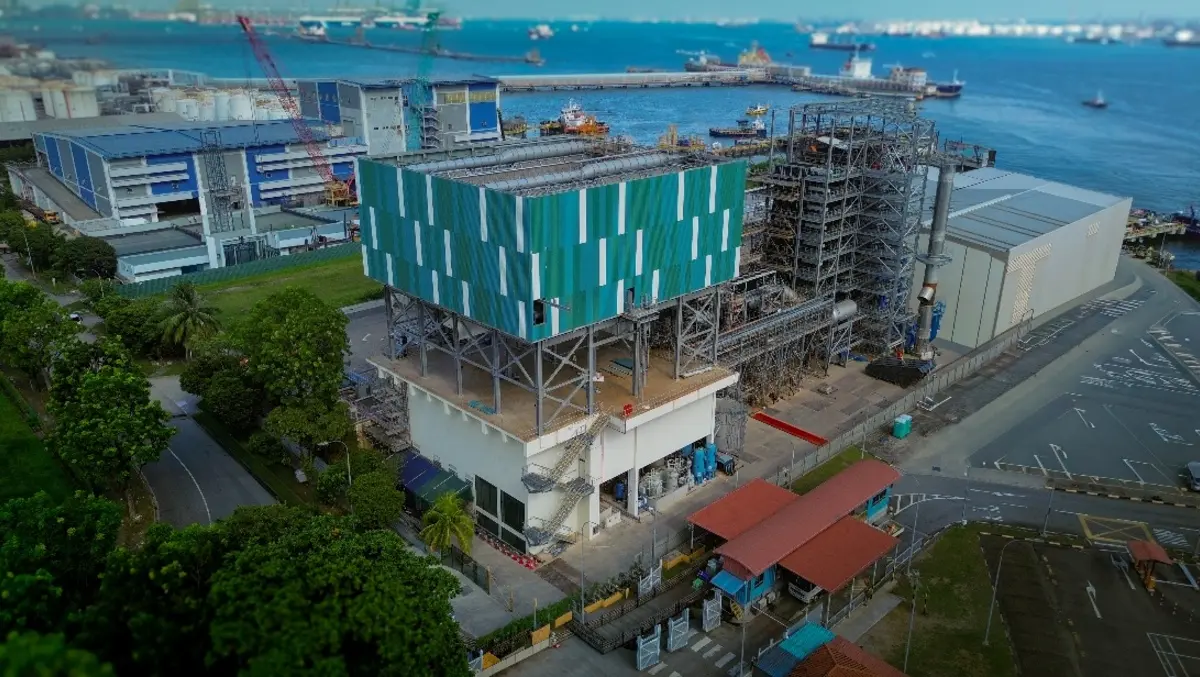
Yokogawa will lead the pilot at a 9.9 MW waste-to-energy plant operated by Rexus Bioenergy. Research partners are the National University of Singapore and the Singapore Institute of Technology.
The project will examine how industrial and distributed energy assets can help support the stability of Singapore's next-generation electricity grid as the country adds more renewable energy and seeks to cut emissions. It will also test whether industrial facilities can play a more active role in grid services while continuing their main operations.
Singapore's power sector is central to the country's decarbonisation effort, accounting for about 40% of national emissions. At the same time, electricity demand is rising and the system is becoming more complex as more distributed energy resources are added.
This shift is moving the traditional model of centrally managed generation towards a more decentralised network. The authorities have set out the Future Grid Capabilities Roadmap to guide research, pilots and deployment as the power system evolves.
John Chen, Executive Director of AEDO, said the programme is designed to connect public research funding with commercial deployment.
"Addressing Singapore's energy challenges requires close collaboration between industry and the research community to develop solutions that can be deployed in real-world settings. Through public R&D funding, we aim to catalyze such partnerships that translate promising technologies into practical applications. Industry-led collaborations such as Yokogawa's project bring together complementary expertise to accelerate energy innovation, strengthen Singapore's R&D capabilities, and support our longer-term decarbonization goals," Chen said.
Grid services
The pilot is expected to focus on inertia provision, a technical function that helps maintain grid stability when there are disturbances in supply and demand. As more renewable generation and inverter-based resources connect to the system, the issue is drawing greater attention from grid operators globally.
For Singapore, the question is whether existing industrial sites such as process plants, and newer large electricity users such as data centres, can provide these services without disrupting their core activities. The project will study how conventional assets and inverter-interfaced assets can be coordinated for that purpose.
Eugene Toh, Assistant Chief Executive of Energy Technologies at EMA, linked the work to the operational demands of a grid with a growing share of renewables.
"As Singapore integrates more renewable energy into our power system, developing new solutions to maintain grid stability will become increasingly important. The Energy Grid 3.0 Grant Call supports research and innovation to address such emerging challenges. We welcome industry efforts to develop innovative solutions that could help strengthen Singapore's grid resilience as it evolves," Toh said.
Technology stack
The consortium plans to combine research from NUS and SIT with Yokogawa's industrial systems experience. At the plant level, the project will integrate the Convera Power Plant Controller from BaxEnergy, a Yokogawa company, with Yokogawa's OpreX Collaborative Information Server.
The controller is intended to coordinate multiple technologies and energy resources in real time, while the information server aggregates operating data from different systems into a single environment. The pilot will test how those systems can support operational decisions and future grid services at the waste-to-energy site.
The award also marks a notable step for Yokogawa's Sustainability Incubation Hub in Singapore, which the company launched in 2024. The hub was set up to work with industry, academic and public-sector partners on climate and energy projects.
Chay Kin Wah, President and Chief Executive Officer of Yokogawa Engineering Asia, said the project fits that model.
"The vision of Yokogawa's Sustainability Incubation Hub is to bridge innovation and implementation by bringing together industry, academia, and public-sector partners to address complex sustainability challenges. The Energy Grid 3.0 project is a direct embodiment of that vision and reflects Yokogawa's commitment to supporting customers through their energy transition journey. Together with our partners, we aim not only to create a more resilient, sustainable solution for Singapore's future energy system but also scalable solutions for the wider Southeast Asia, Oceania, and Taiwan region," Wah said.