Industry 4.0 stories
QAD CEO Anton Chilton and President Pam Lopker visited Indonesia to discuss the rise of cloud-based ERP and Industry 4.0 in the Asia Pacific region.
The country has openly expressed its desire to become the prime destination for high-tech industries in Southeast Asia.
The anticipation around what Industry 4.0 may bring to the table has placed ASEAN—a region of relatively lower labor productivity—firmly under the spotlight.
New Zealand businesses are predicted to reach NZD$65 billion in capital formation in 2017, and set a new record of $70 billion in 2018.
A shortage of engineers is already constraining construction, manufacturing and agriculture as firms struggle to adapt to new skills and technologies.
Jobseekers could cut training time from days to minutes as a new virtual reality tool is piloted to fill construction skills gaps in New Zealand.
Metal industry leaders will debate productivity, sustainability and AI in a free new podcast aimed at New Zealand businesses.
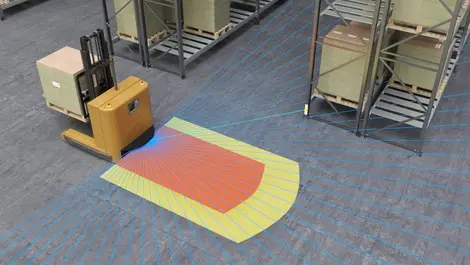
AGV operators can cut sensor counts and simplify integration as one laser scanner handles both safety and navigation up to 50 m.
Most Kiwi builders are missing out on returns from new kit, as skills gaps and poor systems integration blunt tech gains.
Safer warehouse automation is getting simpler as new scanners and sensors cut installation complexity and help prevent AGV collisions.
Facilities managers are facing lower costs and faster fault response as connected sensors and software automate maintenance across buildings.
Hygienic cabling and sealed components can cut contamination risk, reduce shutdowns and help food makers meet strict cleaning demands.
Construction firms could save time and money as AI use is projected to jump from USD $407.2 million to USD $1.83 billion by 2023.
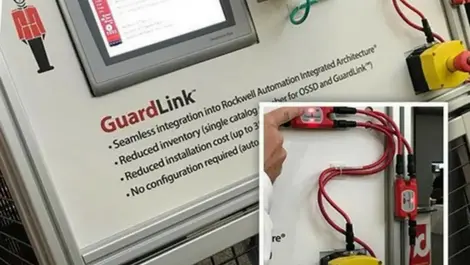
Factories could cut wiring by up to 38% as a new Rockwell Automation safety system gives operators clearer diagnostics and faster fault-finding.
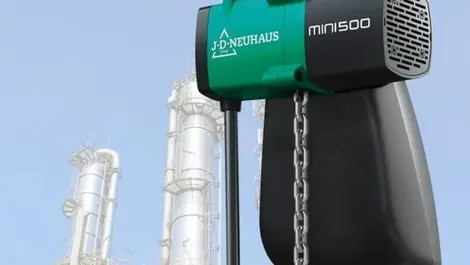
Users can now access instructions and certificates on the hoist via an NFC tag, while maintenance is easier and runtime has doubled.
Material Recycling Facilities could boost sorting accuracy as BHS’s Max AI system uses robotics to tackle waste streams more efficiently.
Rising cyberattacks on smart grids are driving utilities to adopt stronger identity checks and encryption as connected meters multiply 30% a year.
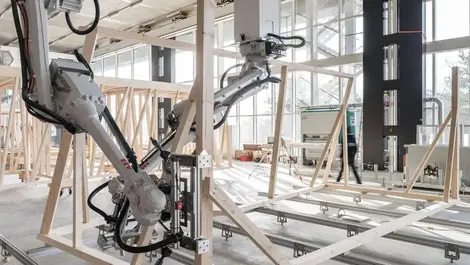
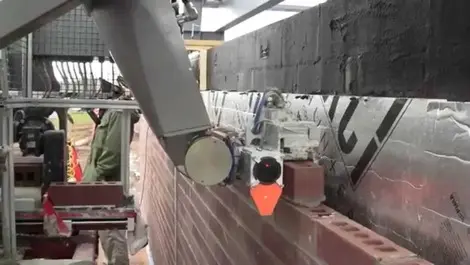
Robotic construction could cut costs and speed work on a school serving 1,800 people across 12 villages in Jiangxi province.
Low productivity in construction is pushing firms towards robotics, 3D printing and modular building as McKinsey says the sector lags on R&D.
New Zealand could reap up to USD $3.3 billion over 10 years from IoT, but experts say AI support will be needed to unlock the gains.